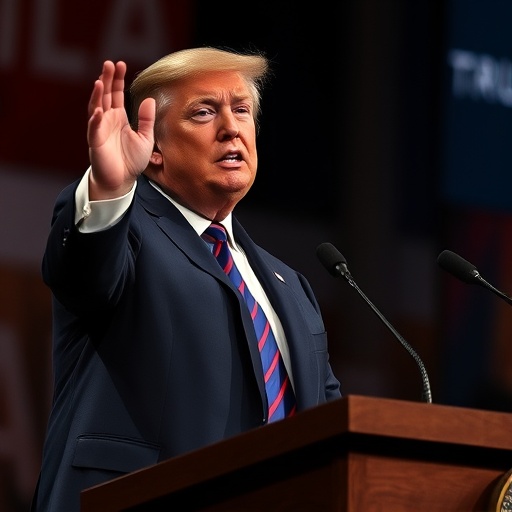
In a political landscape often defined by tradition and precedent, former President Donald Trump has once again stirred the waters with a bold and unexpected statement. During a recent event, Trump referred to himself as an “eight-year president,” a remark that has ignited widespread speculation and debate about the possibility of a third term. This intriguing comment challenges the conventional two-term limit enshrined in the U.S. Constitution and has left supporters, critics, and political analysts alike pondering what it could mean for the future of American politics. In this post, we’ll explore the context behind Trump’s statement, its legal and political implications, and the reactions it has sparked across the nation.
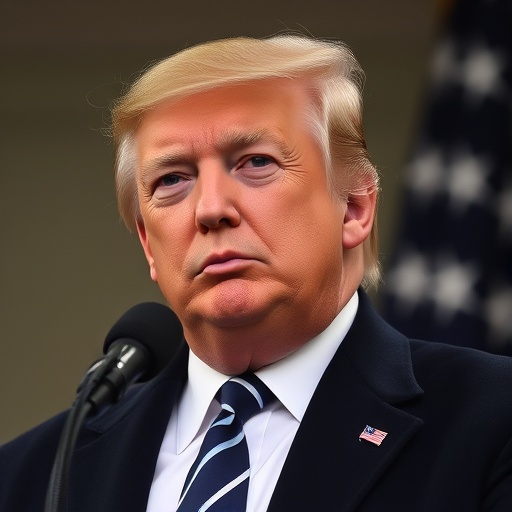
1. Behind Trump’s “Eight-Year President” Remark
Donald Trump’s recent comment referring to himself as an “eight-year president” has reignited speculation and debate across political circles and the media. While the U.S. Constitution clearly limits presidents to two terms, Trump’s bold remark stirred conversations about his intentions and the future of his political career. Some interpret the statement as a confident assertion of his ambition to reclaim the presidency in the 2024 election and potentially serve a full second term, thereby totaling eight years in office. Others view it as a strategic move to energize his base and keep his political influence strong amid ongoing challenges within the Republican Party. Regardless of the underlying motive, the comment underscores Trump’s enduring presence in American politics and highlights the complex dynamics shaping the upcoming election cycle. Understanding the context and reactions to this statement provides valuable insight into the evolving landscape of U.S. presidential politics and the ongoing dialogue about leadership and legacy.
2. nding the Two-Term Limit: Constitutional Perspectives
The U.S. Constitution’s 22nd Amendment, ratified in 1951, firmly establishes the two-term limit for presidents, restricting any individual from serving more than two elected terms in office. This amendment was designed to preserve the democratic principle of regular leadership change and prevent the consolidation of power in a single individual. However, recent remarks by former President Trump, referencing the possibility of becoming an “eight-year president,” have reignited discussions around the interpretation and flexibility of this constitutional provision. While the 22nd Amendment clearly prohibits serving more than two elected terms, debates have surfaced about whether non-consecutive terms or alternative political roles could circumvent this limit. Constitutional scholars emphasize that any attempt to extend presidential tenure beyond the prescribed two terms would require significant legal challenges and potentially a constitutional amendment. As the conversation unfolds, it underscores the enduring importance of the 22nd Amendment in shaping the balance of power within the U.S. government and the ongoing dialogue about presidential term limits in American politics.
3. plications of Pursuing a Third Term
The prospect of Donald Trump pursuing a third term as president, sparked by his recent “eight-year president” remark, carries significant political and constitutional implications. Firstly, the U.S. Constitution’s 22nd Amendment explicitly limits presidents to two elected terms, making a third term legally impossible under current law. Any attempt to circumvent this restriction would trigger intense legal battles and constitutional debates, potentially shaking the very foundations of American democracy. Politically, such a move could deeply polarize the electorate, energizing both his supporters and opponents, and reshaping party dynamics ahead of future elections. Moreover, it raises questions about the precedent it would set for presidential term limits, which have long been a safeguard against the concentration of power in one individual. Ultimately, while the idea of a third term might rally certain factions, it also risks unprecedented controversy and challenges that could redefine the political landscape for years to come.
4. l Reactions and Public Opinion
The bold remark by Donald Trump referring to himself as an “eight-year president” has ignited a wave of reactions across the political spectrum and among the public. Supporters have embraced the statement with enthusiasm, viewing it as a confident assertion of his potential to return to the White House and continue his policies. Many see it as a rallying cry that energizes the base ahead of upcoming elections. On the other hand, critics have expressed concern and skepticism, interpreting the comment as a challenge to established democratic norms and a possible indication of ambitions beyond the traditional two-term limit. Political analysts and commentators have weighed in, debating whether this rhetoric is a strategic move to dominate media attention or a genuine hint at future plans. Social media platforms have been abuzz with hashtags and discussions, reflecting a divided public opinion where some celebrate the prospect while others voice apprehension. Overall, the remark has succeeded in stirring conversation and speculation about the future political landscape in the United States.
One-Time
Monthly
Yearly
Make a one-time donation
Make a monthly donation
Make a yearly donation
Choose an amount
$5.00
$15.00
$100.00
$5.00
$15.00
$100.00
$5.00
$15.00
$100.00
Or enter a custom amount
$
Your contribution is appreciated.
Your contribution is appreciated.
Your contribution is appreciated.
DonateDonate monthlyDonate yearly Mastering the Art of Motivation: A Step-by-Step Guide to Helping Others Achieve Their Goals
Leave a comment